
Pilot Training
Color Blindness and Pilot Eligibility in India
Home Color Blindness and Pilot Eligibility in India If you are worried that color blindness might end your pilot dream before it starts, here’s the
IGRUA stands for Indira Gandhi Rashtriya Uran Akademi. It’s a name every aspiring pilot in India runs into sooner or later. This government flying school falls under the Ministry of Civil Aviation and is located at Fursatganj Airfield near Raebareli in Amethi district, Uttar Pradesh. Set up in 1985, IGRUA has quietly built one of the strongest reputations in the country for turning ground school graduates into licensed commercial pilots.
IGRUA isn’t just a flying school anymore though. Over the years it has expanded into Aircraft Maintenance Engineering, DGCA-certified drone training, and English Language Proficiency testing, alongside its core pilot training program. If you’re researching IGRUA, you’ve probably seen these listed on their website: Progress in IGRUA, Flying Training, AME Training, Drone Training, and ELP Training. Here’s what each of them actually means, what they cost, and why Flying Training is the one that matters most if your goal is a commercial pilot license.
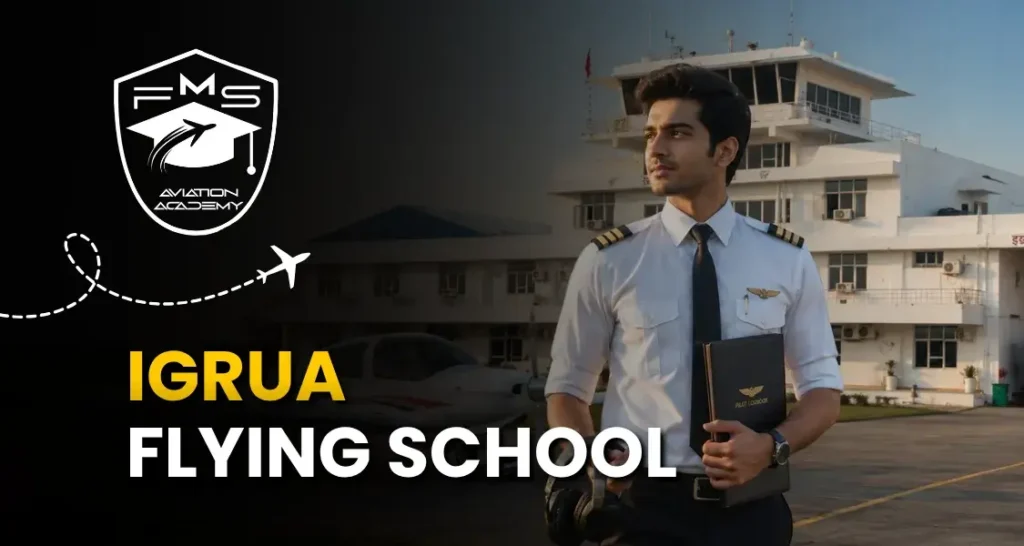
IGRUA started in 1985 with a straightforward mandate: produce well trained commercial pilots for Indian aviation. Four decades later, it’s grown into what the institute itself calls a knowledge and skill development hub for civil aviation.
A few things stand out about how far IGRUA has progressed:
This progress matters if you’re comparing flying schools. IGRUA’s growth isn’t just about scale, it’s about the institute continuously adding credibility, infrastructure, and course options rather than staying static.
If you’re currently in DGCA Ground Classes and evaluating where to complete your flying hours, an institute’s track record like this is worth factoring in.
This is the part most students actually care about, so let’s break it down properly.
IGRUA’s Ab-initio to CPL course runs for roughly two years. It isn’t just flying from day one. The first four to five months are spent entirely with the Ground Training Department, covering Air Navigation, Radio Aids, Aviation Meteorology, Technical General, Air Regulations, and Radio Telephony (Restricted). Cadets sit through around 489 lectures to reach ATPL level knowledge in these subjects before they’re even allowed near the flight operations side.
Once ground training is cleared, cadets move to Flight Operations for the actual flying phase.
Before touching an actual aircraft, every cadet trains on simulators first. This isn’t a token session, it’s a structured phase covering basic checks, cockpit familiarization, and standard operating procedures. The simulators can recreate bad weather, technical snags, and emergency scenarios, giving cadets a chance to build confidence before they face these situations for real. Simulator flying and actual aircraft training then progress side by side through the rest of the course.
Here’s how the flying hours typically progress at IGRUA:
After hitting 200 hours, cadets go through a Multi Crew Coordination (MCC) course on the Diamond DA-42 simulator, run by a retired airline captain, covering how cockpit responsibilities are actually shared in an airline environment.
IGRUA doesn’t rely on any external airport for its training. It runs its own independent runway (1722 metres), equipped with PAPI, VOR/DME, and ILS, along with its own ATC, fire fighting facilities, medical facilities, and night flying setup. The current fleet includes 11 Diamond DA-40 aircraft with Garmin 1000 glass cockpits for single engine training and 2 Diamond DA-42 aircraft for multi engine and instrument training.
One detail that surprises a lot of students is how IGRUA handles winter. Poor visibility at Fursatganj restricts flying during those months, so the academy temporarily shifts flying operations to Gondia in Maharashtra to keep training on schedule.
By the time a cadet finishes, they walk away with a CPL, Instrument Rating on both single and multi engine aircraft, and a level of exposure to real-world flying conditions that most flying schools don’t offer.
Curious how this fits with your own progress? If you’ve cleared or are working through your DGCA Ground Classes, this is essentially the next stage of your pilot training journey. Talk to an FMS mentor if you want help figuring out how your timeline lines up with a flying school like IGRUA.
📞 75994 01111 | Contact Us
This is one of the first things most students want clarity on, so here’s the breakdown by course.
Fee structures can be revised year to year, so it’s worth cross-checking the latest figures on IGRUA’s official website before making any financial commitments. IGRUA also lists financial assistance options for eligible candidates, worth checking if cost is a deciding factor in your planning.
Not every aviation career is about flying the aircraft. Some are about keeping it airworthy, and that’s exactly what IGRUA’s Aircraft Maintenance Engineering program trains students for.
The course is a 3 year, six semester, full time program covering 2400 hours of theory and practical training for the mechanical category B1 (B1.2), including 340 hours of hands-on practical work in a live maintenance environment. It’s run under CAR 147 (Basic) and follows the CAR 66 syllabus, and graduates receive a Certificate of Recognition (C of R) recognised by DGCA. After completing the required Practical Maintenance Experience and passing the relevant modules, students become eligible to apply for their AME license.
Eligibility requires 10+2 with Physics, Chemistry, and Mathematics (or an equivalent engineering diploma), with 50% aggregate for general category candidates and 45% for SC/ST/OBC/EWS candidates. The program currently has 30 seats, and selection is based on entrance exam performance, 10+2 marks, and interview scores.
IGRUA entered the drone space in February 2021, partnering with Drone Destination to launch India’s first exclusive Drone Training Hub in Gurugram. Since then, the program has expanded to multiple locations including Bangalore, Gwalior, Kangra, Coimbatore, Madurai, and Bhopal.
The training covers both Micro and Small category drones and includes theory classes, flight simulators, drone assembly, and supervised solo flying sessions, all aimed at helping candidates earn a Remote Pilot Certificate. IGRUA also runs a “Train the Instructor” course for people looking to train instructors at DGCA-approved Remote Pilot Training Organisations. Basic eligibility is a 10th pass in English and a minimum age of 18.
Every pilot flying commercially in India needs a valid English Language Proficiency (ELP) endorsement on their license. This isn’t optional, it’s a DGCA requirement under ICAO Annex 1 standards. IGRUA conducts ELP Training and Testing specifically for pilot aspirants, assessing candidates across six competency areas: pronunciation, structure, vocabulary, fluency, comprehension, and interaction, all evaluated in an aviation-specific context.
For most cadets, this isn’t a separate hurdle to stress over. It’s built into the broader IGRUA training pathway and typically comes up naturally as part of the DGCA licensing process.
Reading through everything IGRUA offers, one thing becomes clear. Flying training is the backbone, but the surrounding programs (AME, drone, and ELP) all exist to build a complete aviation ecosystem under one roof.
For students, this raises a practical question: how do you make sure you’re actually ready for a program this structured and this competitive? That’s usually where preparation makes the real difference, not just clearing DGCA Ground Classes on paper, but genuinely understanding the subjects well enough to handle interviews, entrance exams, and the transition into flying training without losing momentum.
This is exactly the gap FMS Aviation Academy exists to close.
If IGRUA or a similar flying school is part of your plan, getting your Commercial Pilot License starts with strong ground school preparation. That’s where FMS comes in.
Have questions about entrance prep, flying school selection, or your overall pilot training roadmap? An FMS expert can walk you through it. 📞 75994 01111 | Contact Us | Browse All Courses
IGRUA stands for Indira Gandhi Rashtriya Uran Akademi, a government flying school under India’s Ministry of Civil Aviation.
IGRUA is located at Fursatganj Airfield, near Raebareli, in Amethi district, Uttar Pradesh.
As per IGRUA’s official fee structure, the Ab-initio to CPL course costs Rs. 55,00,000, plus approximately Rs. 2.5 Lakhs for uniform, study material, and other essentials. This does not include boarding and lodging.
IGRUA offers five main verticals, Flying Training for the Ab-initio to CPL program, Aircraft Maintenance Engineering (AME), DGCA-certified Drone Training, English Language Proficiency (ELP) Training and Testing, and a B.Sc. (Aviation) degree program.
The Ab-initio to CPL course takes approximately two years, split between ground training (4 to 5 months) and flying training, which continues until the cadet completes 200 flying hours.
IGRUA operates 11 Diamond DA-40 aircraft with Garmin 1000 glass cockpits for single engine training and 2 Diamond DA-42 aircraft for multi engine and instrument training.
Yes. AME is a distinct 3 year engineering program focused on aircraft maintenance and licensing, separate from the Flying Training pathway that leads to a Commercial Pilot License.
Yes, ground subject knowledge is essential before starting flying training. Institutes like FMS Aviation Academy help students build this foundation before they apply to flying schools like IGRUA.
FMS provides structured DGCA Ground Classes, an AI-powered preparation platform, and mentorship from a Senior Airline Captain to help students build the knowledge and confidence needed before entering flying training. Contact FMS at 75994 01111 for a free counselling session.
Home Color Blindness and Pilot Eligibility in India If you are worried that color blindness might end your pilot dream before it starts, here’s the
Home What Is Instrument Rating in Aviation? Instrument Rating is the qualification that allows a pilot to fly an aircraft using only the instruments in
Home What Is Type Rating in Aviation? A type rating is the certification that allows a pilot to fly a specific aircraft type, not aircraft
Home IGRUA Flying School: Courses, Fees and Training Guide IGRUA stands for Indira Gandhi Rashtriya Uran Akademi. It’s a name every aspiring pilot in India
Home How Much Do Pilots Earn in India Per Month? India’s civil aviation sector is preparing for a major expansion. The Airports Authority of India
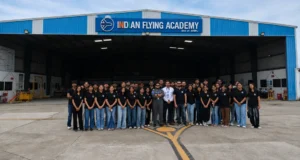
Home FMS Aviation Academy Organizes Free IFA Visit for Students FMS Aviation Academy organized a free IFA visit for its DGCA ground class students to
Home How Much Do Pilots Earn in India Per Month? Pilots in India earn between ₹30,000 and ₹15 lakh per month. Pay depends on rank,
Home DGCA Ground School: CPL Ground School Guide & DGCA CPL Papers (2026) DGCA Ground School is mandatory theory training for every pilot aspirant in
Home DGCA CPL Training in India: Complete 2026 Guide for Pilot Aspirants DGCA CPL training in India qualifies you to fly commercially as a licensed