FMS Aviation Academy

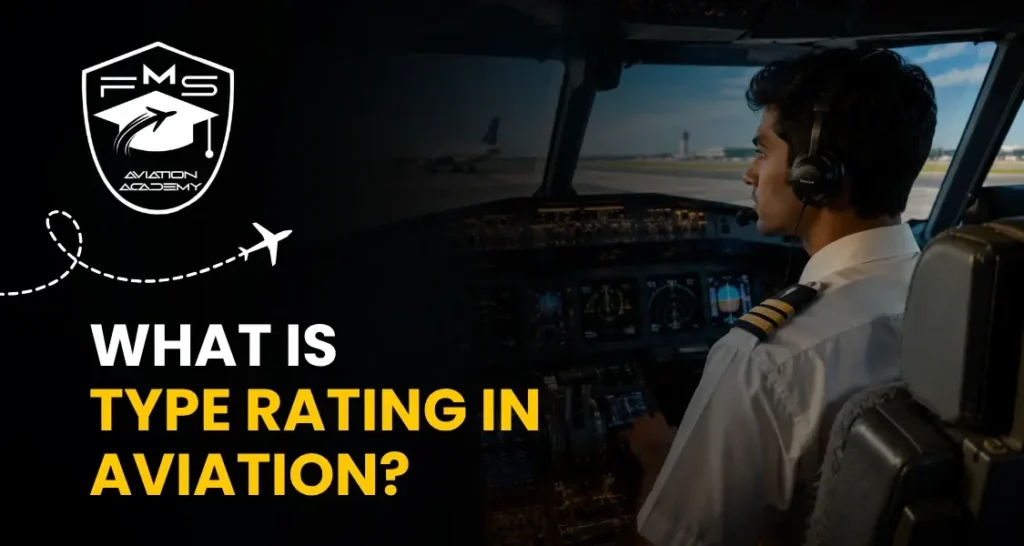
What Is Type Rating in Aviation?

A type rating is the certification that allows a pilot to fly a specific aircraft type, not aircraft in general, one exact model. Clearing your CPL doesn’t let you walk into a cockpit and fly an Airbus A320 or a Boeing 737. You need a separate, aircraft-specific qualification for that, and that qualification is called a type rating.

Think of it this way. Your CPL proves you know how to fly. A type rating proves you know how to fly this particular aircraft, its systems, its automation, its emergency procedures, and its specific handling characteristics. A 737 type rating doesn’t let you fly an A320, and an A320 type rating doesn’t let you fly a 737. Every commercial jet or turboprop above a certain weight requires its own type rating, and this is a hard DGCA requirement, not a preference.

What Is Type Rating in Aviation

Why Type Ratings Exist

Every aircraft type is built differently. Cockpit layouts differ, automation logic differs, engine handling differs, and emergency procedures differ. A pilot who’s spent 200 hours flying a small trainer aircraft during CPL training has no exposure to any of this. Type rating training closes that gap before a pilot ever sits in the cockpit of a commercial jet with passengers on board.

This is also why type ratings sit between your CPL and your first airline job. Airlines won’t hire a First Officer without one, since it’s the qualification that proves you’re actually ready to operate their specific fleet.

When Do You Need a Type Rating?

You need a type rating once you’ve completed your CPL and are ready to move toward an airline First Officer role. For most Indian CPL holders, the choice comes down to two paths:

  • Jet type ratings (Airbus A320, Boeing 737): the standard route for pilots targeting IndiGo, Air India Express, SpiceJet, or Akasa Air
  • Turboprop type ratings (ATR 72-600): often the more accessible first step for fresh CPL holders with 200 to 500 total flying hours, since it typically requires lower prior experience than jumping straight into a jet type rating

Many pilots start with the ATR 72-600 and move to a jet type rating once they’ve built more hours. Others go straight for the A320 or 737 if they meet the eligibility requirements and are targeting a specific airline early.

What Type Rating Training Actually Involves

Type rating training is intensive, and it’s structured very differently from your CPL ground classes. Here’s what the process typically looks like:

Ground School (3 to 4 weeks) This covers the aircraft’s systems, limitations, and standard operating procedures in detail, classroom sessions plus computer-based training specific to the aircraft type you’re rating on.

Simulator Training (40 to 50 hours) All type rating flying happens in a Level D full-flight simulator, the highest fidelity simulator available, capable of replicating normal, abnormal, and emergency scenarios with full motion and visual accuracy. You won’t touch the real aircraft during this phase.

Skill Test A DGCA-authorised Type Rating Examiner assesses you in the simulator. Pass this, and the rating gets added to your license through eGCA.

Line Training After joining an airline, you complete a structured set of supervised real-world flights before you’re cleared to operate independently as a First Officer.

From start to skill test, this entire process typically takes 6 to 8 weeks, though simulator slot availability and training pace can affect the timeline.

If this stage feels intense, that’s normal. It’s one of the biggest jumps in a pilot’s training journey, going from a light training aircraft to a full commercial jet cockpit. FMS Aviation Academy’s Pre-Type Rating Course exists specifically to close that gap, covering systems, procedures, and simulator familiarisation before you start your actual type rating program.

📞 75994 01111 | Contact Us

What Does a Type Rating Cost?

Type rating costs in India typically range from ₹12 to ₹30 lakhs, depending on the aircraft type, training centre, and whether you train in India or abroad. This cost is separate from your CPL course fees; it’s an additional investment made after you’re already licensed.

A few things affect the final cost:

  • Aircraft type: ATR 72-600 ratings tend to be more affordable than A320 or 737 jet ratings
  • Training location: domestic training is generally cheaper than training abroad, though travel, accommodation, and visa costs apply for overseas options
  • Cadet sponsorship: if you’re selected through an airline’s cadet program, the airline often funds the type rating as part of the sponsorship arrangement, removing this cost entirely

If you’re budgeting for your full pilot training journey, it’s worth reading our detailed breakdown in Pilot Course Fees & Duration in India, which covers CPL costs alongside type rating costs so you can plan the complete picture.

Which Type Rating Should You Choose First?

This depends mostly on your total flying hours and which airlines you’re targeting.

  • A320 Type Rating: the standard choice for pilots targeting IndiGo or Air India Express, since these carriers operate large A320 family fleets
  • Boeing 737 Type Rating: relevant for pilots targeting SpiceJet, Air India Express, or Akasa Air, all of which operate 737 NG or MAX variants
  • ATR 72-600 Type Rating: often the more practical first step for fresh CPL holders with fewer hours, offering solid regional airline employment prospects before moving to a jet rating later

If you’re still deciding, our detailed guides on the A320 Type Rating, Boeing 737 Type Rating, and ATR 72-600 Type Rating break down eligibility, syllabus, and airline hiring patterns for each aircraft separately.

What Happens After Your Type Rating

Getting your type rating doesn’t automatically mean you’re airline-ready on day one. Most pilots benefit from additional preparation before their first line check or airline technical interview, this is where a lot of freshly type-rated pilots underestimate the gap between passing a skill test and performing confidently in real airline operations.

FMS Aviation Academy’s Post Type Rating Course is built for exactly this transition, reinforcing technical knowledge, SOPs, and multi-crew coordination under the guidance of a Senior Airline Captain, so you walk into your first airline assessment prepared rather than hoping simulator memory holds up under pressure.

Planning your type rating and not sure which aircraft or training path fits your career goals? Talk to an FMS expert before you commit. 📞 75994 01111 | Contact Us | Browse All Courses

FAQs: Type Rating in Aviation

What is a type rating in simple terms?

A type rating is a certification that qualifies a pilot to fly one specific aircraft type, such as the Airbus A320 or Boeing 737. It’s separate from your CPL and is mandatory before flying that aircraft commercially.

Is a type rating the same as a CPL?

 No. A CPL is your core pilot license. A type rating is an additional, aircraft-specific qualification you complete after your CPL, required before joining any airline as a First Officer on that aircraft type.

How much does a type rating cost in India?

Type rating costs typically range from ₹12 to ₹30 lakhs depending on the aircraft (A320, Boeing 737, or ATR 72-600), training centre, and whether training happens in India or abroad.

Which type rating should I get first, A320, 737, or ATR 72-600?

Fresh CPL holders with 200 to 500 total hours often start with the ATR 72-600 for its lower entry requirements, while those targeting IndiGo or Air India Express typically pursue the A320, and those targeting SpiceJet or Akasa Air pursue the Boeing 737.

Does an airline pay for my type rating?

If you’re selected through an airline’s cadet program, the airline often sponsors the type rating as part of the arrangement. Without sponsorship, pilots self-fund this cost after completing their CPL.

Related Posts

DGCA CPL Training in India
Pilot Training

DGCA CPL Training in India

Home DGCA CPL Training in India: Complete 2026 Guide for Pilot Aspirants DGCA CPL training in India qualifies you to fly commercially as a licensed

Read More »