FMS Aviation Academy

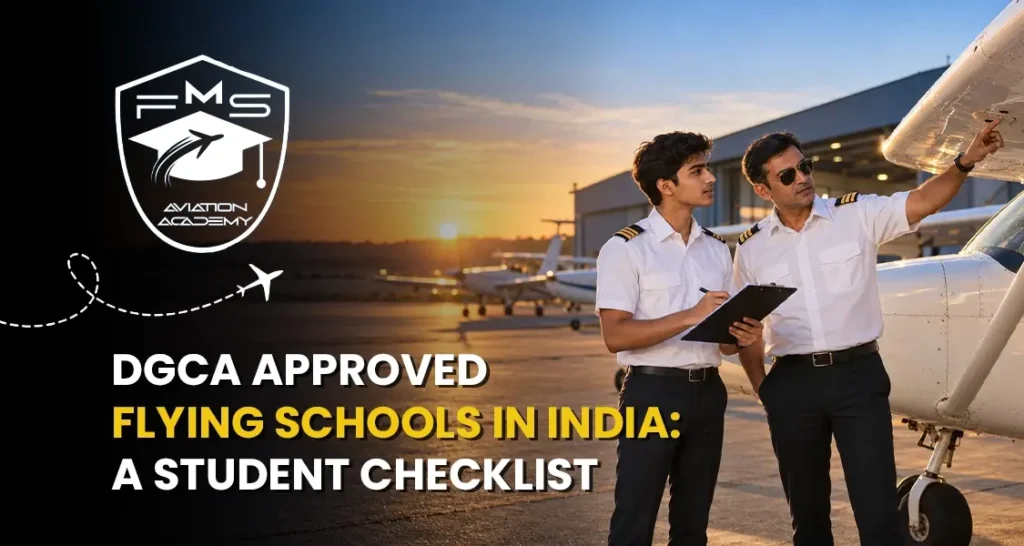
DGCA Approved Flying Schools in India: A Student Checklist

Choosing a flying school is an important step towards becoming a commercial pilot. The quality of training, access to aircraft, instructor availability and overall learning environment can influence how smoothly a student progresses through pilot training. However, choosing a school involves more than comparing fees or relying on its reputation.

Aspiring pilots and their parents should verify the school’s current Directorate General of Civil Aviation (DGCA) approval, understand its training arrangements, and review the total cost before making a financial commitment. Students researching their options can also explore the programmes listed on the FMS Aviation Academy website and clarify the course details relevant to their intended training pathway. The following checklist can help you compare flying schools and make a more informed decision.

DGCA Approved Flying Schools in India

How Can You Verify the DGCA Approval Status of a Flying School

A DGCA-approved Flying Training Organisation (FTO) is authorised to conduct the relevant flight training within the scope of its approval. For students pursuing a Commercial Pilot Licence (CPL), confirming this status is essential because the required flying experience must be acquired through an appropriately approved organisation.

Do not rely solely on advertisements, social media posts, or old lists of flying schools. Check the latest information published on the DGCA website before enrolling.

Verify these details:

  • The exact registered name of the flying school.
  • Its approved flying base or bases.
  • The current status and validity of its approval.
  • Whether the intended training programme falls within its authorised scope.
  • Whether the school is currently operating and providing flying training.

Confirm the school’s operational status directly and obtain clear answers before paying admission fees. The DGCA’s official FTO information and published rankings can serve as starting points for this verification.

How Should You Compare the Top 10 Flying Schools in India

A school that suits one student may not be the best fit for another because location, training availability, budget, and support requirements differ. Searching for the top 10 flying schools in India can help you begin your research, but a ranking or online list should not determine your final choice. 

DGCA’s published FTO information and ranking framework, where available, can help students compare flying schools using more structured criteria. Check the latest official information before making a decision.

Compare shortlisted schools on the following factors:

  • Current DGCA approval and published ranking, where available.
  • Number of training aircraft and their operational availability.
  • Instructor strength and student-to-aircraft ratio.
  • Safety procedures and training facilities.
  • Transparency of fees and payment terms.
  • Expected training timeline and student support.

Instead of asking only which school is the best, consider which approved school can provide the training arrangements, support and value that match your needs.

What Should You Check About the Aircraft Fleet and Training Facilities

Regular access to serviceable training aircraft is important for consistent flying practice. A school may advertise a large fleet, but the number of aircraft available for actual student training can be more relevant than the total number listed.

During your research or campus visit, ask about:

  • The number and types of aircraft used for training.
  • Availability of single-engine and, where relevant, multi-engine training.
  • Aircraft maintenance and operational arrangements.
  • Simulator access, classrooms, and briefing rooms.
  • How aircraft maintenance or unexpected downtime affects flying schedules.

Ask how frequently students can expect to fly and what happens when training is interrupted. Clear information about aircraft availability can help you assess whether the proposed training timeline is realistic.

How Can You Understand the CPL Training Requirements and Timeline

CPL training includes theoretical preparation as well as practical flying experience. Before enrolling, students should understand the major licensing stages and the requirements that apply to their individual circumstances.

Check the following:

  • Eligibility: Confirm the applicable age and educational requirements, including Physics and Mathematics.
  • Medical fitness: Understand the required DGCA medical assessments and when to complete them.
  • Examinations: Review the applicable theoretical examination subjects and preparation process.
  • Flying experience: Understand the prescribed flight hours, required components, and skill tests.
  • Progress tracking: Ask how the school records flying hours and monitors student progress.

A minimum of 200 flying hours is commonly cited for an Indian aeroplane CPL, but the applicable DGCA licensing rules and the student’s training pathway must be considered. Weather, aircraft serviceability, instructor availability, and individual progress can affect completion time.

What Is the Total Cost of Training at a Flying School

The advertised course fee may not cover every expense associated with obtaining a CPL. Request a written fee breakdown before committing to a programme.

Your budget should account for:

  • Admission and ground-school fees.
  • Flying-hour charges and any additional flying requirements.
  • Examination, medical, and licensing-related expenses.
  • Accommodation, meals, and transport, where applicable.
  • Additional costs if training takes longer than expected.

Also, review payment schedules, cancellation conditions, and refund policies carefully. Ask whether unused flying-hour payments are refundable and how extra charges are calculated. Comparing the total expected cost, rather than only the initial fee, can help you avoid financial surprises.

How Can You Evaluate Instructors, Safety and Student Support

Qualified instructors, consistent supervision and clear safety procedures are important parts of a well-organised training environment. Students should ask about instructor qualifications, availability, experience, and how continuity is maintained if an instructor becomes unavailable.

Understand how the school handles pre-flight briefings, aircraft maintenance, safety concerns, and student feedback. You should also check whether it provides academic guidance, examination support, flying-progress updates, and assistance with relevant administrative procedures.

Speaking with current students or recent graduates can provide a useful perspective on the actual training experience. Ask about flying frequency, communication with instructors, delays, and how the school responds to student concerns.

Student Checklist Before Enrolling in a Flying School

Use this checklist during your research or school visits:

  • Verified the school’s current DGCA approval.
  • Confirmed the approved flying base and training scope.
  • Checked aircraft availability and instructor strength.
  • Understood CPL eligibility and licensing requirements.
  • Obtained a complete written fee breakdown.
  • Reviewed safety procedures and student support.
  • Discussed the expected training timeline.
  • Checked the refund policy and additional charges.
  • Compared to other flying schools before deciding.

Conclusion

The best flying school is not necessarily the cheapest or the one that appears most frequently in online lists. A suitable choice depends on current DGCA approval, reliable access to training aircraft, qualified instructors, transparent fees, safety practices, and a realistic training plan. Taking time to verify these factors can help students and parents make a more confident decision.

Aspiring pilots can also explore FMS Aviation Academy as part of their research into aviation training and related programmes.A careful comparison will help you choose a pathway that aligns with your goals, budget and expectations.

FAQs: DGCA Approved Flying Schools

How Can You Check Whether a Flying School Is DGCA Approved?

Visit the official DGCA website and check the latest list of approved Flying Training Organisations (FTOs). Verify the school’s registered name, approved flying base, current approval status, and authorised training scope before paying any fees.

What Are the Factors to Consider When Choosing a Flying School in India?

Consider DGCA approval, aircraft availability, instructor experience, safety procedures, training facilities, total fees, expected training duration, and student support. Comparing these factors across multiple schools can help you identify a suitable option.

What Are the Top 10 Flying Schools in India?

Use the latest DGCA FTO information and published rankings, where available, as a starting point for your research. Then compare individual schools based on their training facilities, operational availability, costs and your requirements.

How Much Does CPL Training Cost in India?

The total cost varies by flying school, training arrangements, flying-hour charges and additional expenses. Request a written fee breakdown covering ground classes, flying hours, examinations, medical assessments, accommodation, and possible additional training before enrolling.

How Many Flying Hours Are Required for a CPL in India

The commonly cited general minimum is 200 flying hours, subject to current DGCA requirements and prescribed experience components.

How Long Does It Take to Complete CPL Training

The duration depends on aircraft availability, weather conditions, instructor availability, examination progress, and the student’s individual performance. Ask the flying school for its expected training timeline and how it manages delays before making a commitment.

Related Posts