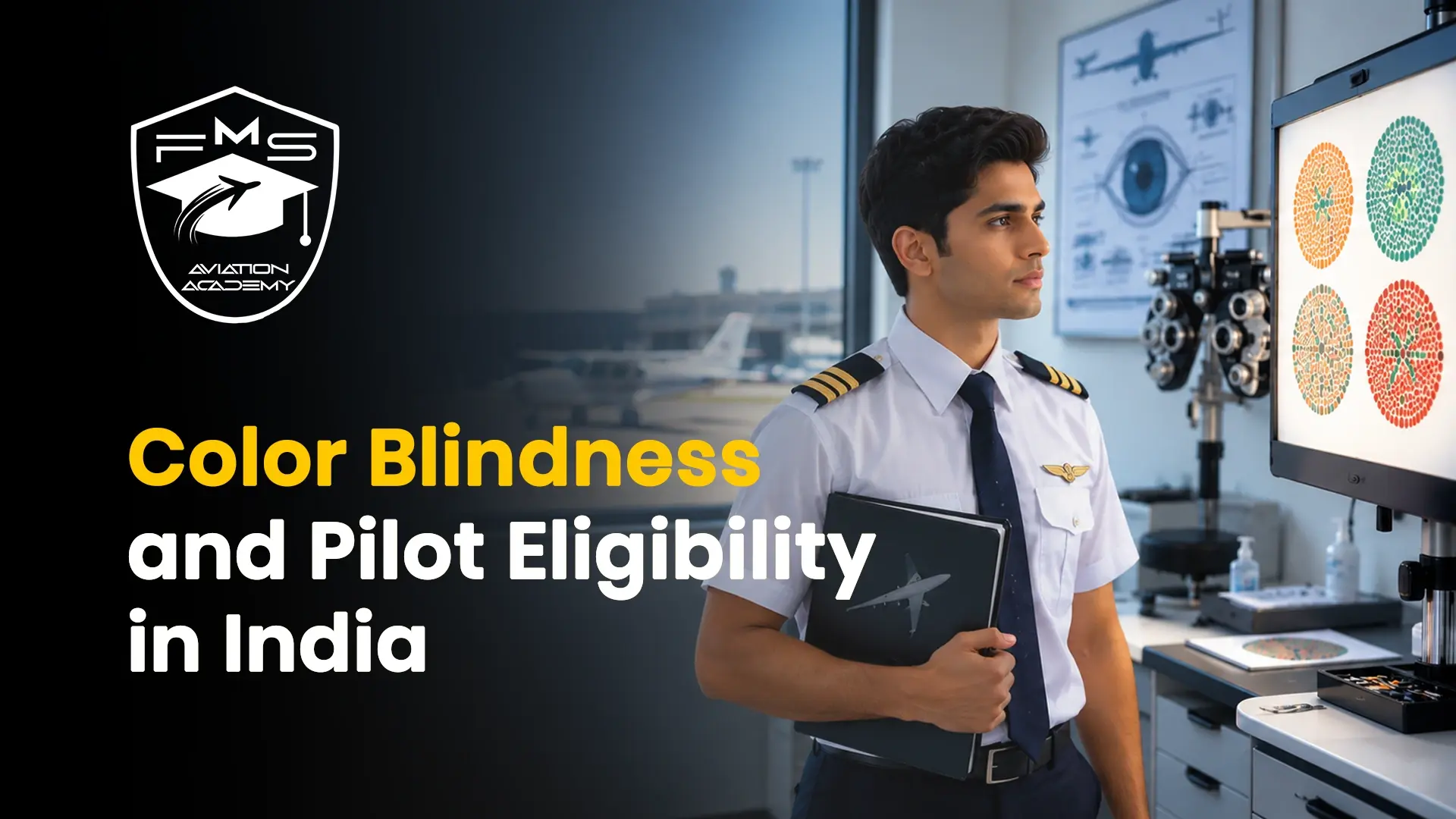
Color Blindness and Pilot Eligibility in India
Home Color Blindness and Pilot Eligibility in India If you are worried that color blindness might end your pilot dream...

You will spend ₹35-80 lakh at your flying school and hand it 18 months of your life. Most students choose one on brochure photos and a WhatsApp forward.
Here is the checklist that actually predicts whether you finish on time – or sit on the ground waiting for a serviceable aircraft.
FMS Aviation Academy helps students guide which flying school with the right fit based on Budget, Timeline, Location, Training Quality, Aircrafts and multiple other factors
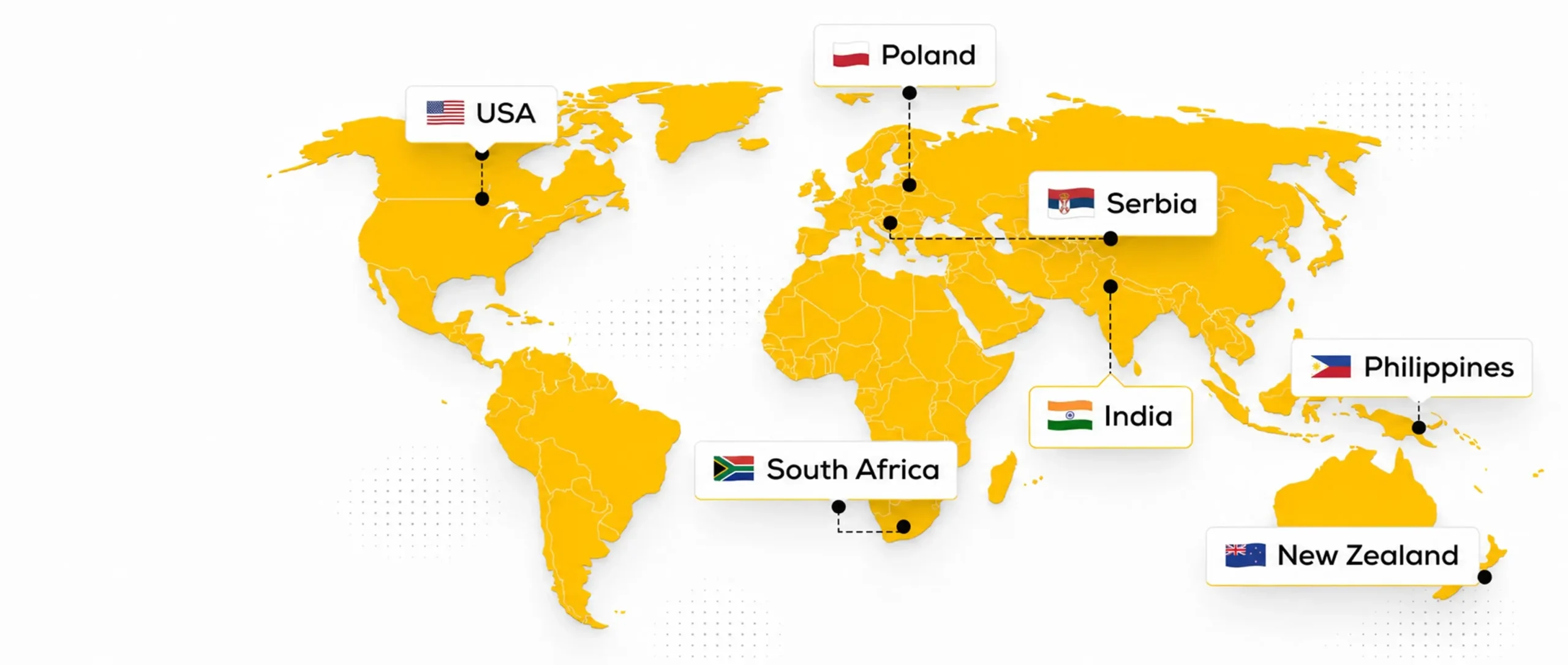
Our students are training across the India, USA, Poland, Serbia, South Africa, the Philippines, and New Zealand – gaining real-world flying experience in diverse global environments.
More than 350+ Students have cleared DGCA Exams with us and started their flying training in last 2 years in more than 7 countries.


To choose the right flying school, verify it is a current DGCA-approved Flying Training Organisation, check its category in the DGCA’s bi-annual FTO ranking and whether that category is improving, then compare aircraft-to-student ratio, actual flying days per year, instructor availability, average time students take to finish 200 hours, and the total cost including everything the package price leaves out. Visit before you pay.
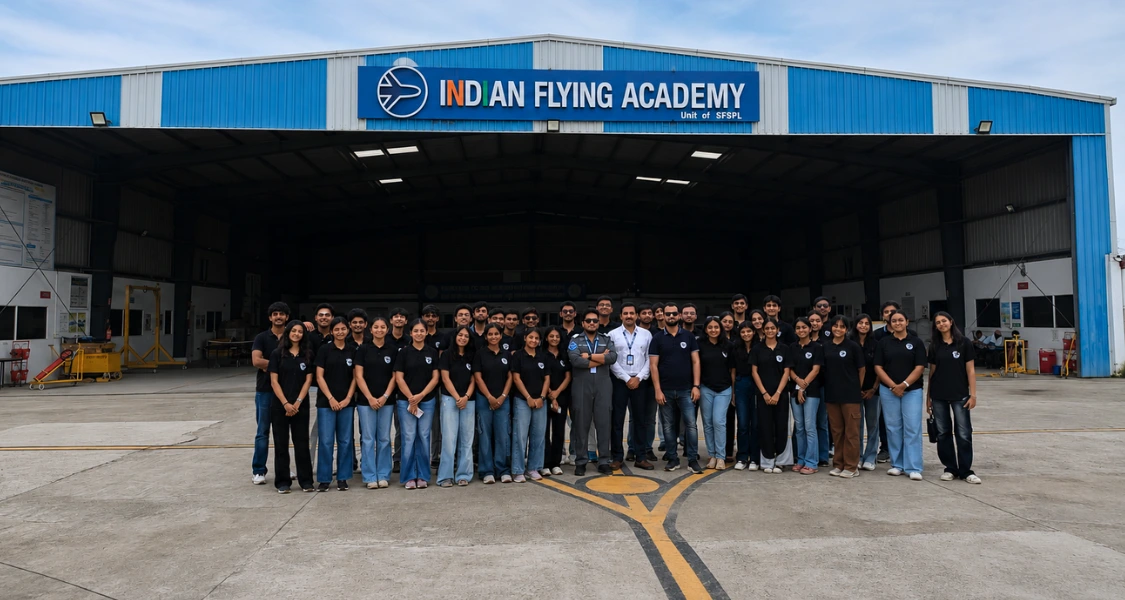
FMS arranges day trips for students to visit flying schools. Next Visit coming soon.
Ground school costs a fraction of your CPL. Flying training is where the money goes – and where it gets lost. A complete CPL in India typically runs between ₹50 lakh and ₹1.2 crore once you add flying hours, exams, medicals, type rating and living costs. The number that ruins budgets is not the hourly rate. It is time.
A school that quotes ₹35 lakh but takes three years to give you 200 hours will cost you more than one quoting ₹50 lakh that finishes in 16 months – because you pay rent, food and opportunity cost the whole time, and because fee revisions land on you mid-course. Students routinely discover this only after they have paid a non-refundable deposit.
Ask every school: “Of the students who joined 24 months ago, how many have completed 200 hours?” Ask for the number, not a percentage, and ask to speak to two of them. A confident school answers in one sentence. Watch what happens to the room when it cannot.
Work through these in order. The first three are pass/fail – if a school fails any of them, stop and move on regardless of how good the campus looks.
Compare schools on landed cost, not headline fee. Check what’s included and not, ask the right question and build this table.
There is no universally right answer – it depends on your budget, timeline and tolerance for paperwork. What follows is the honest trade-off. If you go abroad, the same ten checks apply – plus visa category, whether the school has trained Indian students before, and exactly how your logbook and licence convert on return.
| Head | Training in India | Training Abroad |
| Licence | DGCA CPL issued directly | Foreign licence, then conversion to DGCA |
| Typical duration | 18-36 months, weather-dependent | 12-18 months, more consistent flying days |
| Conversion step | None | Conversion exams, flying, paperwork – budget time and money |
| Airspace exposure | Indian airspace, procedures you will actually use | High-density controlled airspace, strong R/T exposure |
| Cost driver | Delays and repeat living costs | Exchange rate, visa, accommodation |
| Main risk | Aircraft unserviceability and queues | Visa refusal, school closure far from home, no local recourse |
FMS Aviation Academy is a DGCA ground school, not a flying school. We do not own training aircraft and we are not competing for your flying-hour budget – our job is to get you through your theory papers and into the right FTO with your eyes open.


Go to the DGCA website and open the published list of approved Flying Training Organisations. Each entry shows the organisation name, its declared flying bases, fleet details and the validity dates of its approval. Confirm the specific base you would train at is listed, and that the approval runs past your expected completion date. Do not rely on an approval claim on the school’s own website or brochure.
It is a performance assessment of DGCA-approved flying schools introduced by the Ministry of Civil Aviation, scoring each FTO on five weighted parameters and placing it in a category from A+ to C. The first ranking was published in October 2025 and the second in April 2026. It is updated bi-annually, on 1 April and 1 October, so the next revision is due 1 October 2026.
Not necessarily. In the April 2026 assessment no school achieved A+ and only one reached Category A, so most of the industry sits in B and C. What matters more is the direction of travel – whether the school improved or declined since the previous cycle – and how it performs on the operational checks you can verify yourself, such as fleet serviceability and student-to-aircraft ratio.
Flying training at an Indian FTO typically ranges from around ₹35 lakh to ₹80 lakh depending on the school. A complete CPL journey – including ground classes, exams, medicals, flying hours, type rating and living expenses – generally runs between ₹50 lakh and ₹1.5 crore. Always compare landed cost rather than headline fee, since hostel, extra hours, ratings and fee revisions are usually outside the package.
The 200 hours required for a CPL can realistically be completed in 12 to 18 months at a well-run school. In practice many Indian students take two to three years because of aircraft unserviceability, instructor shortages, weather and enrolment queues. Ask each school how many students who joined 24 months ago have actually finished – that number tells you more than any advertised duration.
Before. Clearing your DGCA theory papers first means you arrive at the flying school ready to focus entirely on flying, rather than paying hostel and living costs while studying between flights. It also means you understand aircraft systems, navigation and meteorology well enough to evaluate a flying school properly and to fly with stronger fundamentals.
It depends on your budget and timeline. Training abroad often means more consistent flying days and faster completion, but adds visa risk, exchange-rate exposure and a licence conversion process on return. Training in India issues a DGCA CPL directly with no conversion, but is more exposed to aircraft unserviceability, queues and weather. The same evaluation checks apply either way.
Your logged hours remain valid and transfer with you, but recovering unused fees depends entirely on what your agreement says. This is why you should insist on a written refund schedule and stage payments against hours actually flown rather than paying a large lump sum upfront. Have a parent or lawyer read the agreement before any money moves.
No. Airlines recruit on their own criteria – assessments, interviews, simulator checks and medical standards – and no flying school controls that process. Treat a guaranteed-placement claim as a reason to walk away. What a good academy can legitimately offer is preparation for airline selection: entrance exam training, simulator assessment practice, group discussion and interview coaching.
More than 300 students have started their aviation careers through FMS Aviation Academy’s Ahmedabad and Surat centres.
Home Color Blindness and Pilot Eligibility in India If you are worried that color blindness might end your pilot dream...
Home What Is Instrument Rating in Aviation? Instrument Rating is the qualification that allows a pilot to fly an aircraft...
Home What Is Type Rating in Aviation? A type rating is the certification that allows a pilot to fly a...
Home IGRUA Flying School: Courses, Fees and Training Guide IGRUA stands for Indira Gandhi Rashtriya Uran Akademi. It's a name...
Home How Much Do Pilots Earn in India Per Month? India's civil aviation sector is preparing for a major expansion....
Home FMS Aviation Academy Organizes Free IFA Visit for Students FMS Aviation Academy organized a free IFA visit for its...